
This page contains images and video footage to accompany "A Video-Based Rendering Acceleration Algorithm for Interactive Walkthroughs" by Wilson, Manocha, Lin, Yeo, and Yeung, published in ACM Multimedia 2000. Information about spatial video encoding is on a different page.
We present a new approach for faster rendering of large synthetic environments using video-based representations. We decompose the large environment into cells and pre-compute video-based impostors using MPEG compression to represent sets of objects that are far from each cell. At runtime, we decode the MPEG streams and use displaying algorithms that provide nearly constant-time random access to any frame. The resulting system has been implemented and used for an interactive walkthrough of a model of a house with 260,000 polygons and realistic lighting and textures. It is able to render this model at 16 frames per second on average on a Pentium II PC with an off-the-shelf graphics card.
A copy of the paper itself is available as a PDF file (494k). It appeared in the ACM Multimedia 2000 proceedings.
These are images taken from the running system. Each one is a thumbnail; click to get a higher-resolution version.
|
|
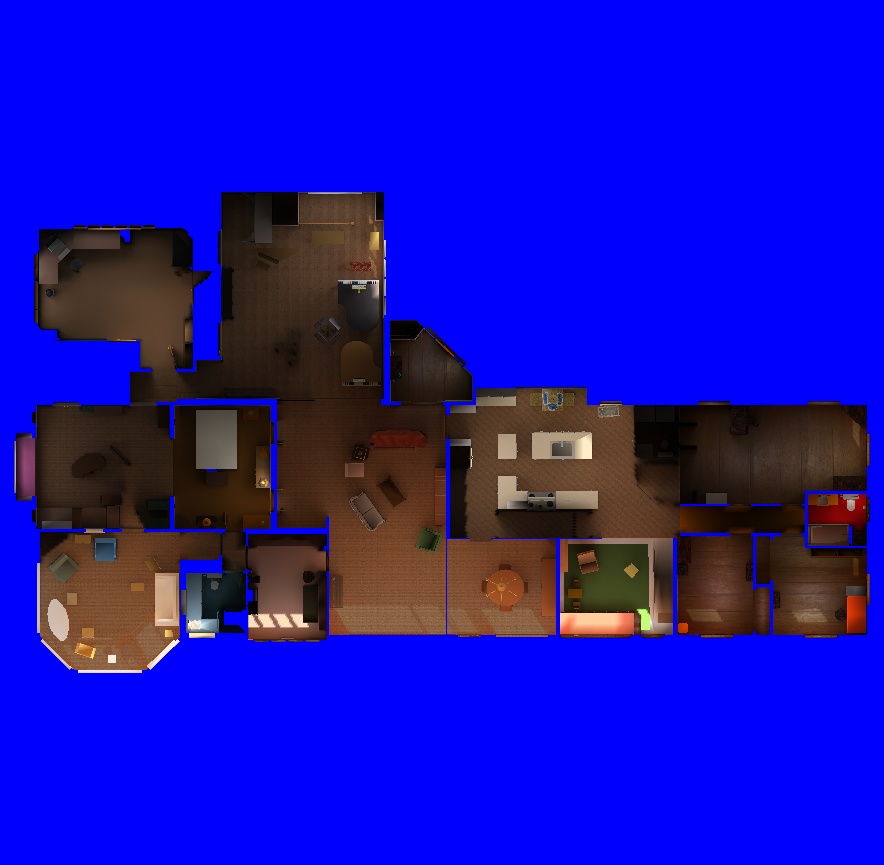
This is the house model we use for our environment, seen from overhead with the roof removed. The image on the right has the cell grid overlaid in green.
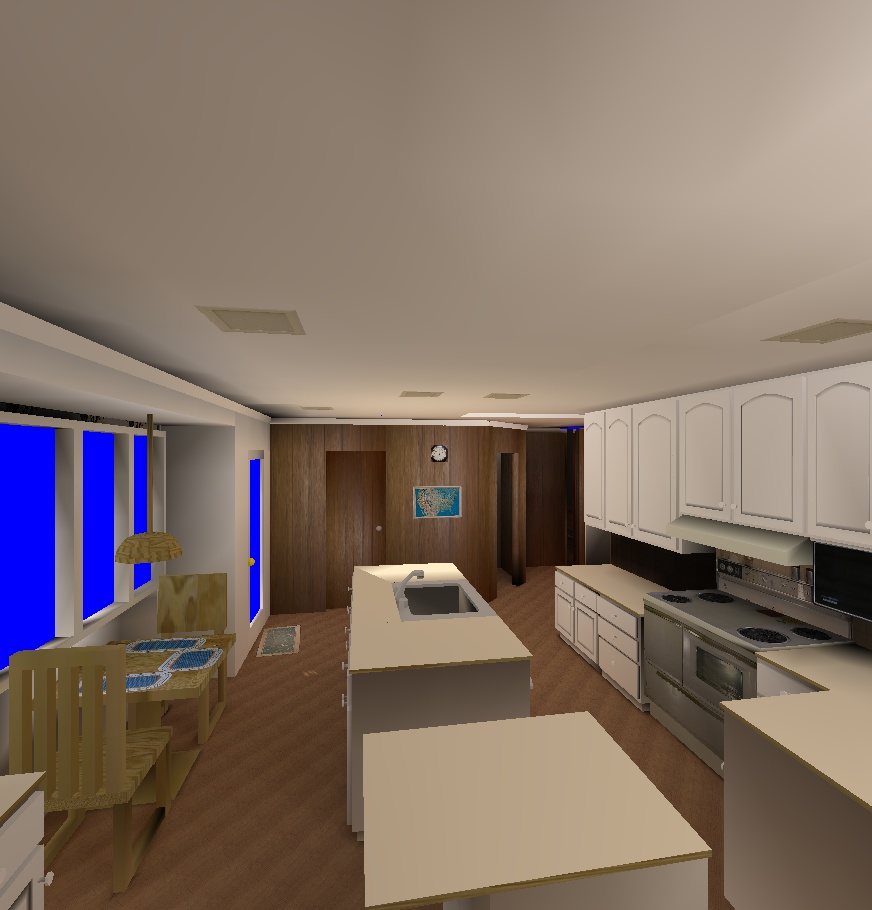
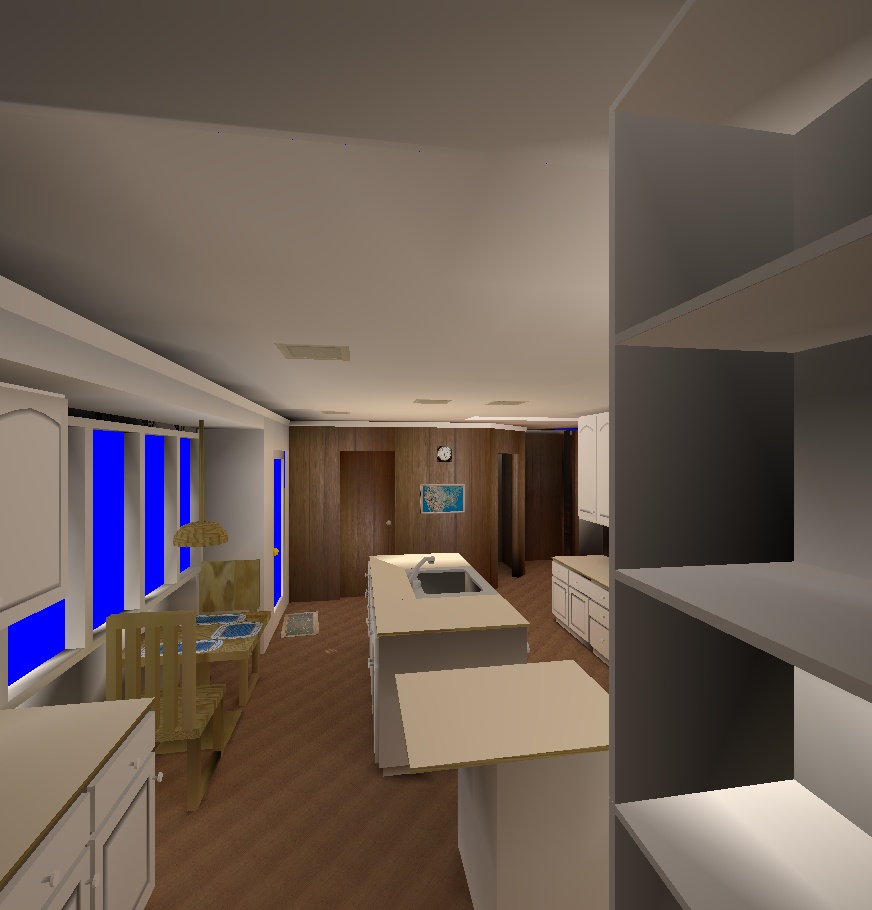
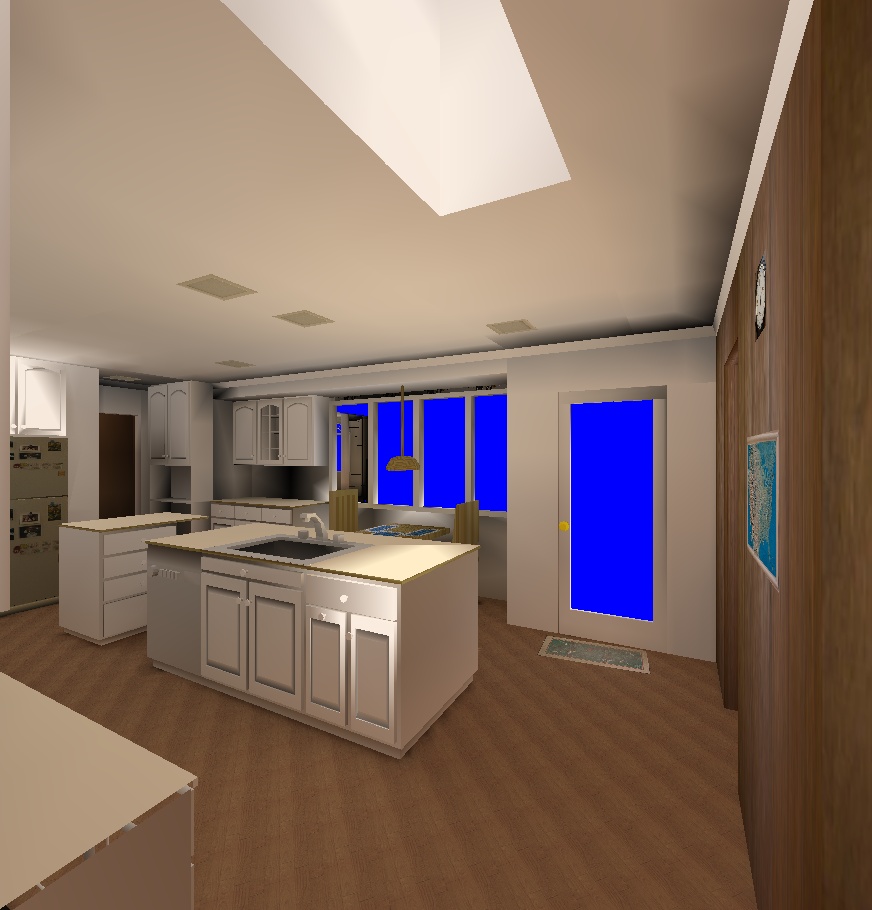
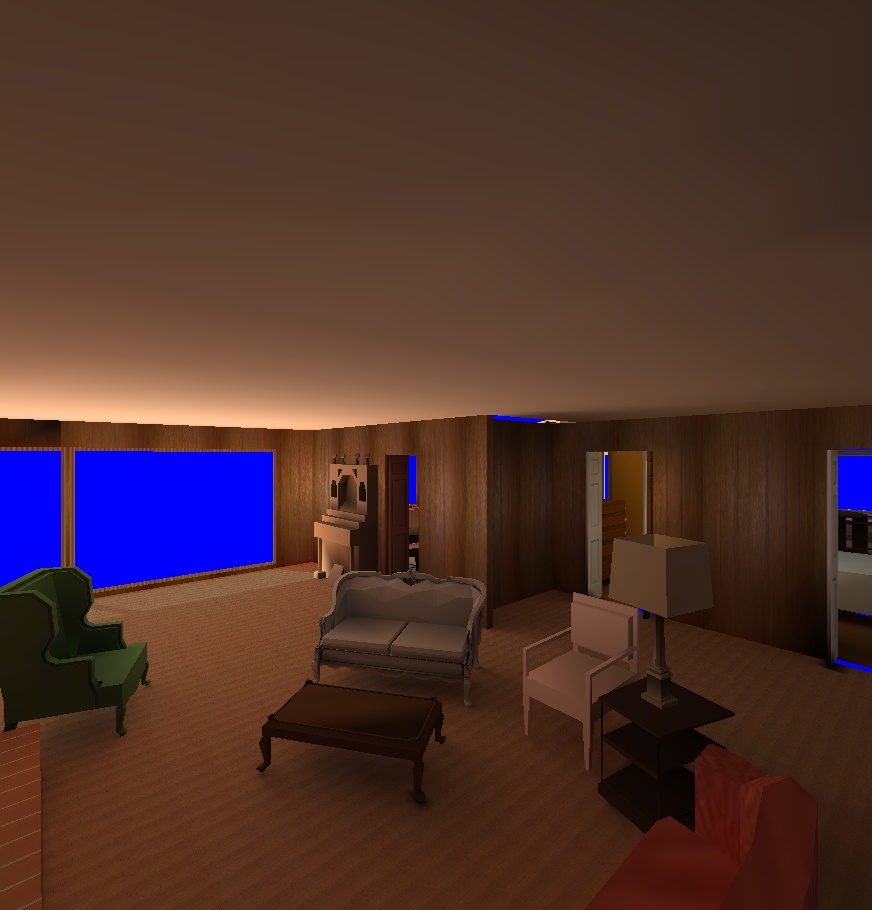
From here on down, the image on the left shows a scene rendered with geometry only. The image on the right employs video-based impostors.
 |
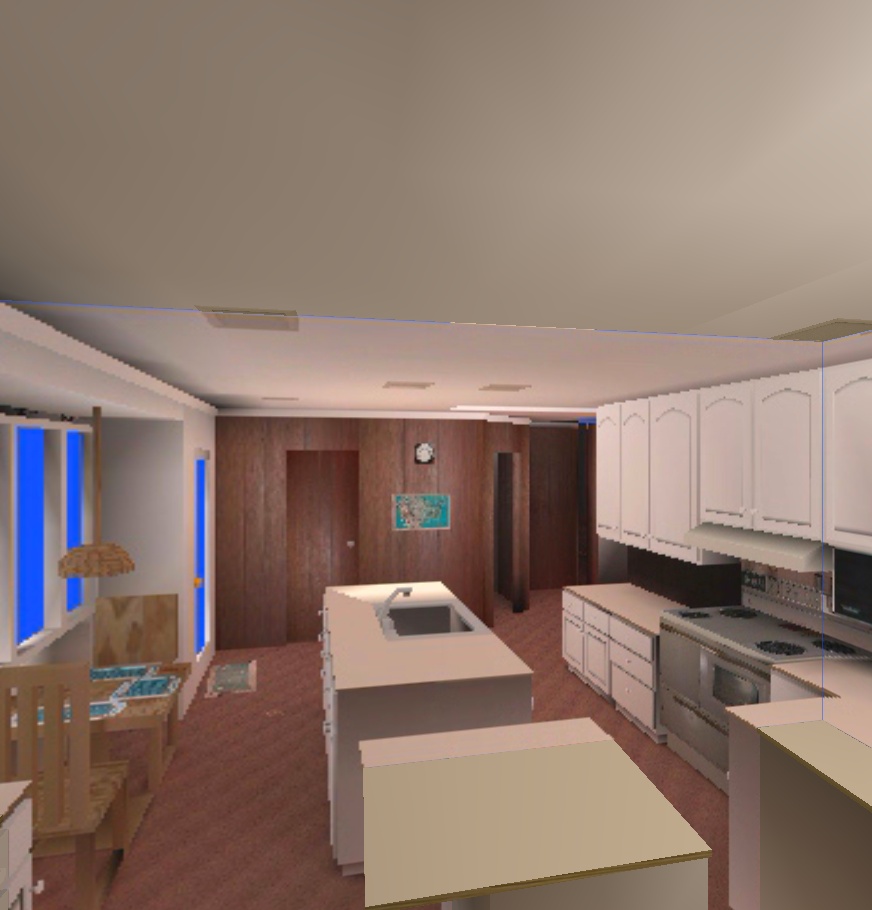 |
This is a typical view of the kitchen. The color discontinuity in the image on the right is an implementation problem, but is useful here to point out where the impostors begin. There's a small amount of perspective distortion in this image where objects cross the impostor boundary.
 |
 |
Another view of the kitchen. The color problem is still there, but perspective distortion is minimized.
 |
 |
This view of the kitchen shows the worst-case perspective distortion. The viewpoint is at the very edge of a cell, as far from the point at which the impostor was captured as possible. A smaller cell grid or a more sophisticated.
 |
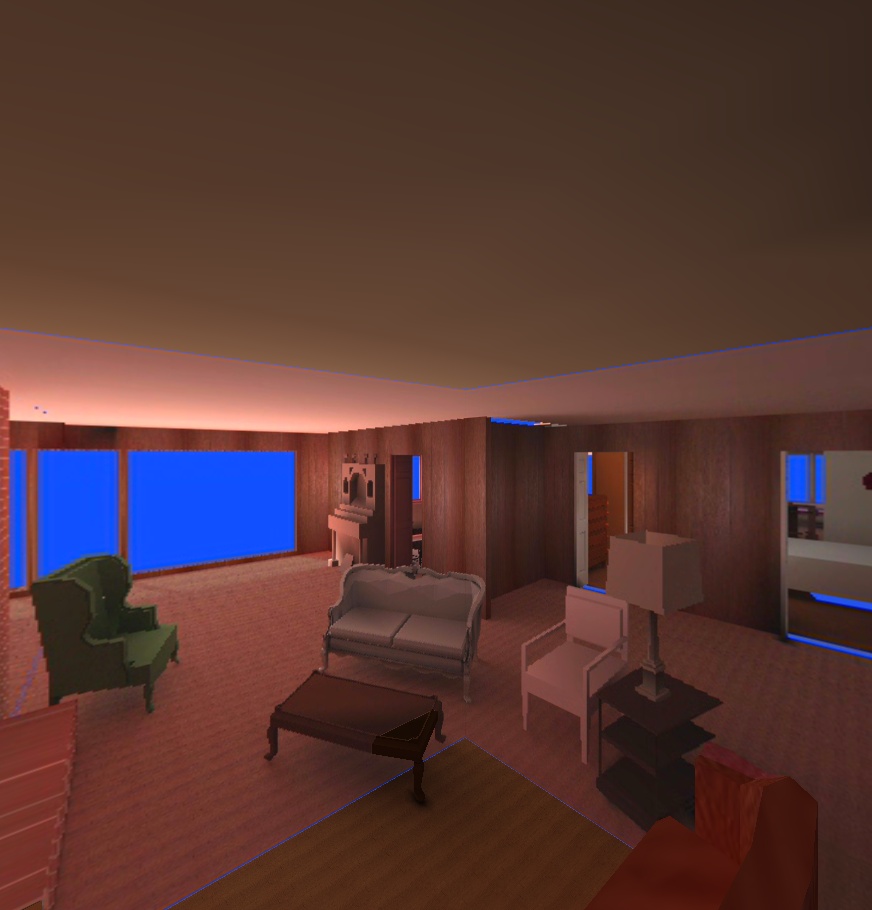 |
Perspective distortion is less apparent in environments with lots of objects, as the eye is not drawn as immediately to the problematic areas.
 |
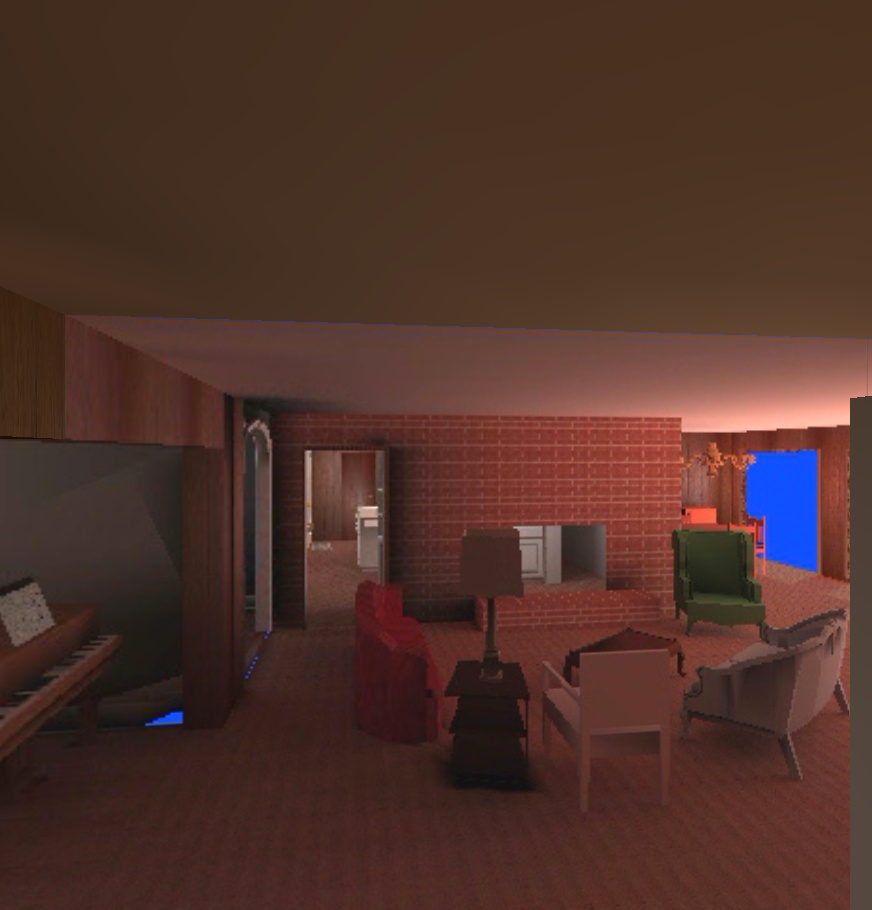 |
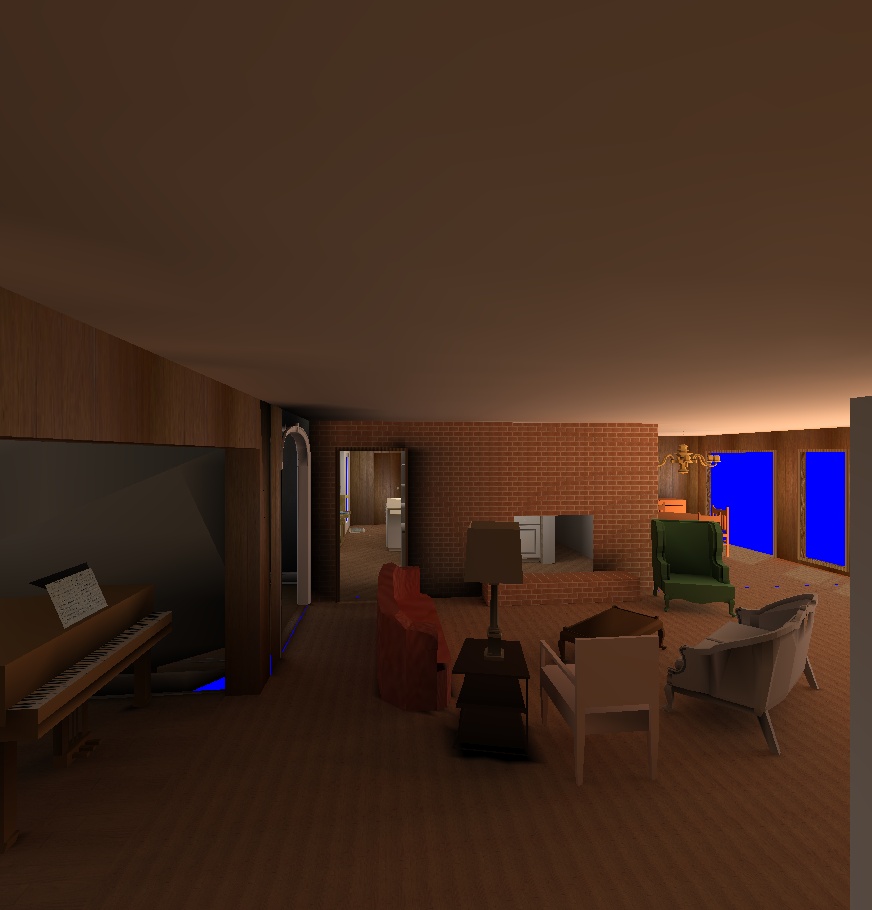
Another view of the living room.
 |
 |
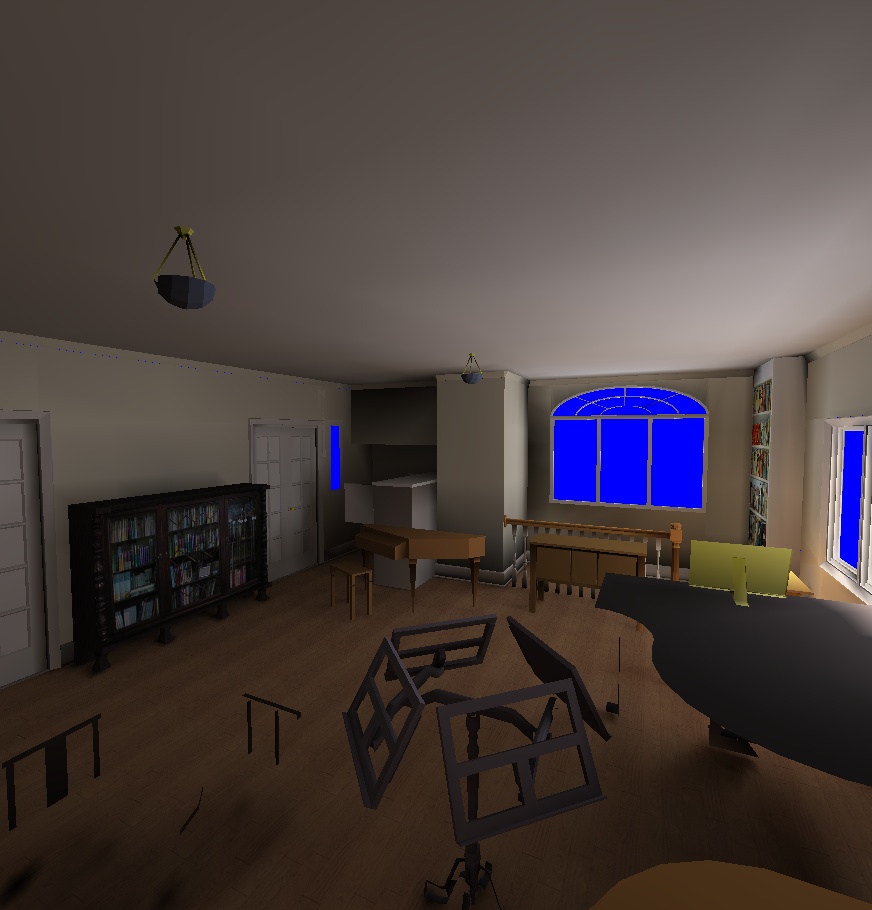
The color discontinuity here is due to a mismatch in the YUV<->RGB conversions used by the MPEG encoder and decoder. We are working to correct this.
 |
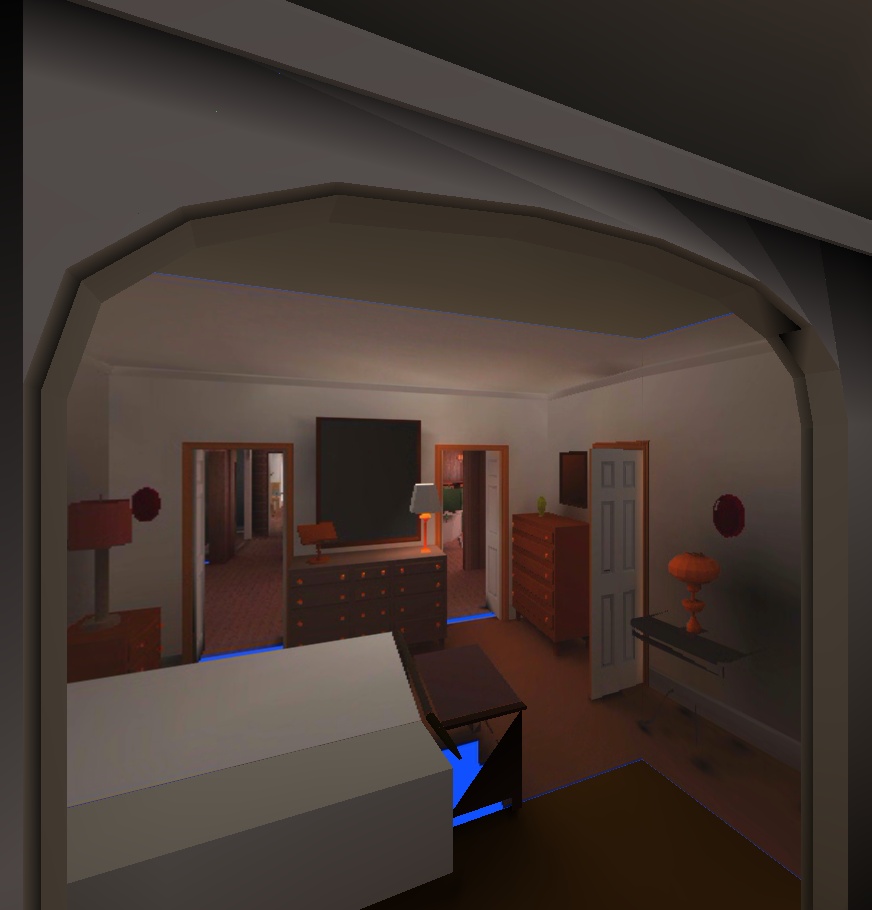 |
This particular part of the environment could also be exploited with traditional cells-and-portals partitioning. A better method of cell creation would take into account the portal formed by the archway leading into the bedroom.
These movies contain live footage of the running walkthrough system. All are in AVI format, encoded using Intel's Indeo codec.
Andy Wilson
Department of Computer Science
CB 3175, Sitterson Hall
University of North Carolina
Chapel Hill, NC 27599-3175